
TODOS OS CANAIS, UMA PLATAFORMA
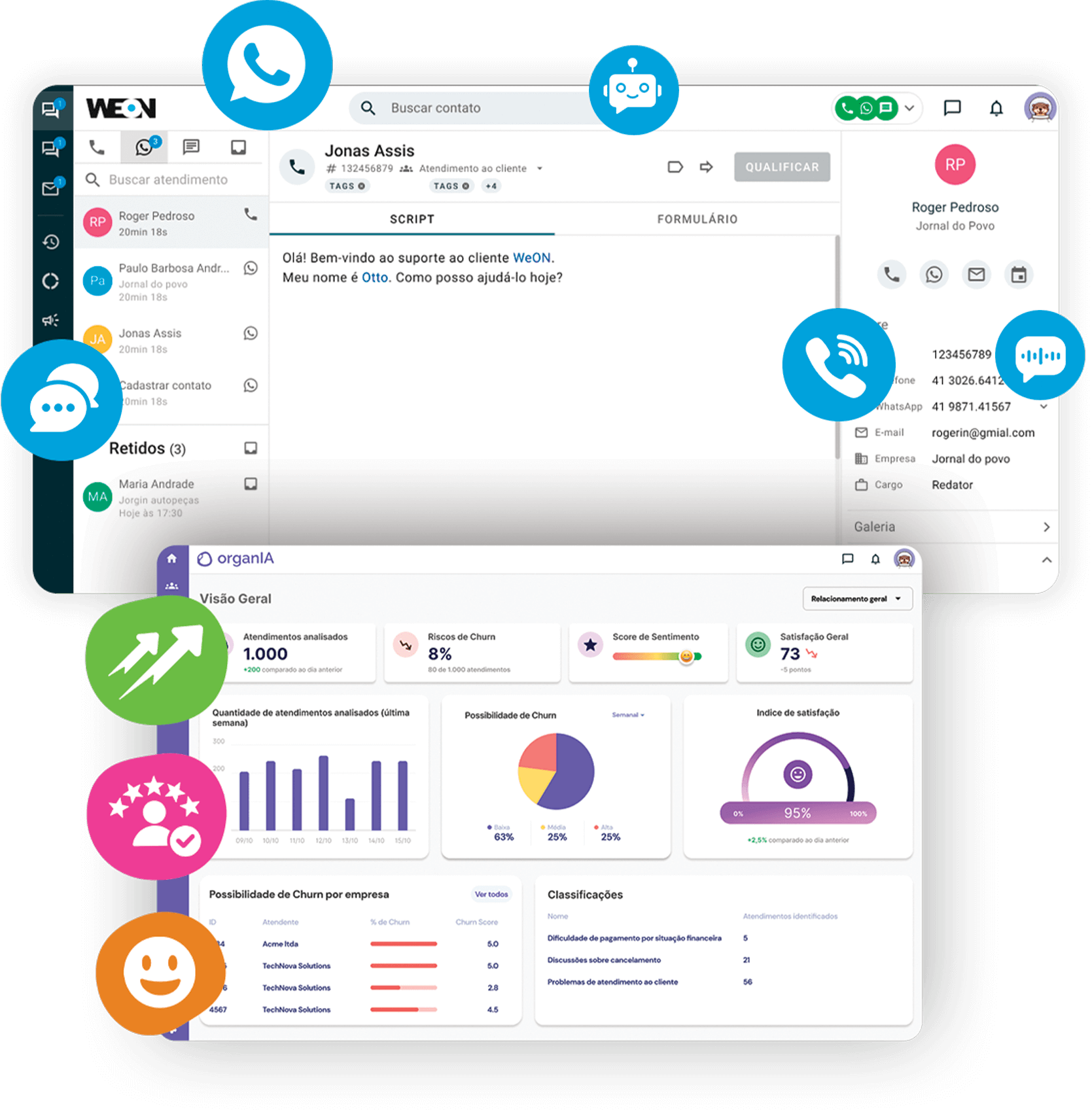
Evolua a comunicação da sua empresa integrando atendimento ao cliente, vendas e fornecedores em uma plataforma Omnichannel
TODOS OS CANAIS, UMA PLATAFORMA
Evolua a comunicação da sua empresa integrando atendimento ao cliente, vendas e fornecedores em uma plataforma Omnichannel
GRANDES MARCAS REALIZAM ATENDIMENTOS INCRÍVEIS COM A WEON












Nossas soluções
O canal que converte 4x mais, com segurança e escala.
Voz
Atendimento humanizado para fidelizar sem perder agilidade.
Bots
Bots que não parecem robôs, com disponibilidade 24/7.
WeAction API
Eficiente, segura e 100% documentada, integrando CRM, ERPs e muito mais.
Ainda não usa Inteligência Artificial
em sua comunicação?
Conheça agora o Atendimentos Incríveis
Dados para o gestor, autonomia para a equipe
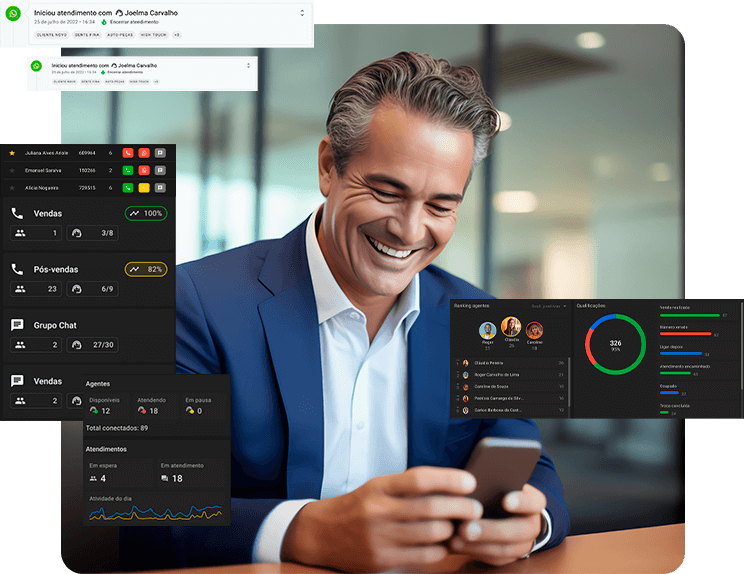
Dashboards personalizados e relatórios em tempo real para a gestão da equipe de forma eficiente. Visibilidade de desempenho, pico de ligações e SLA para decisões mais assertivas.
Dashboards personalizados e relatórios em tempo real para a gestão da equipe de forma eficiente. Visibilidade de desempenho, pico de ligações e SLA para decisões mais assertivas.
A WeON conectada em todo o seu negócio




ENTRE OUTRAS!
Soluções sob medida para cada segmento

Tech
Melhore o atendimento, agilize sua inovação e fortaleça conexões com clientes e parceiros

Cobrança e Jurídico
Agilize processos, garanta a comunicação clara e aumente a recuperação de ativos.

Varejo
Unifique os canais de vendas, personalize experiências com seus clientes e impulsione resultados.

Financeiro
Agilize operações, melhore comunicação com fornecedores e tenha rápdio acesso a histórico de comunicação

Logística
Bots customizados para garantir segurança para o motorista e informações em tempo real para a Central.
Nossos números em 2023
+9M
de atendimentos em voz
+5M
de atendimentos digitais
+13M
de atendimentos incríveis
Nossos números em 2023
+13M
de atendimentos voz
+5M
de atendimentos digitais
+9M
de atendimentos INCRÍVEIS
Agende uma conversa com um dos nossos especialistas
Preencha o formulário e entraremos em contato para trazer a melhor solução para sua empresa.

Contato
+55 41 3075-1375
contato@weon.com.br
Av. João Gualberto, 1259 24° andar
Alto da Glória | Curitiba – Paraná
80030-000
WeON Telecomunicações copyright © 2024. Todos os direitos reservados
CNPJ 10.614.585/0001-93